Mining & Trade News
Malawi Online News
Top Stories
Mining
CSOs advocate for value addition to Malawi’s critical minerals
August 17, 2026 / Wahard Betha
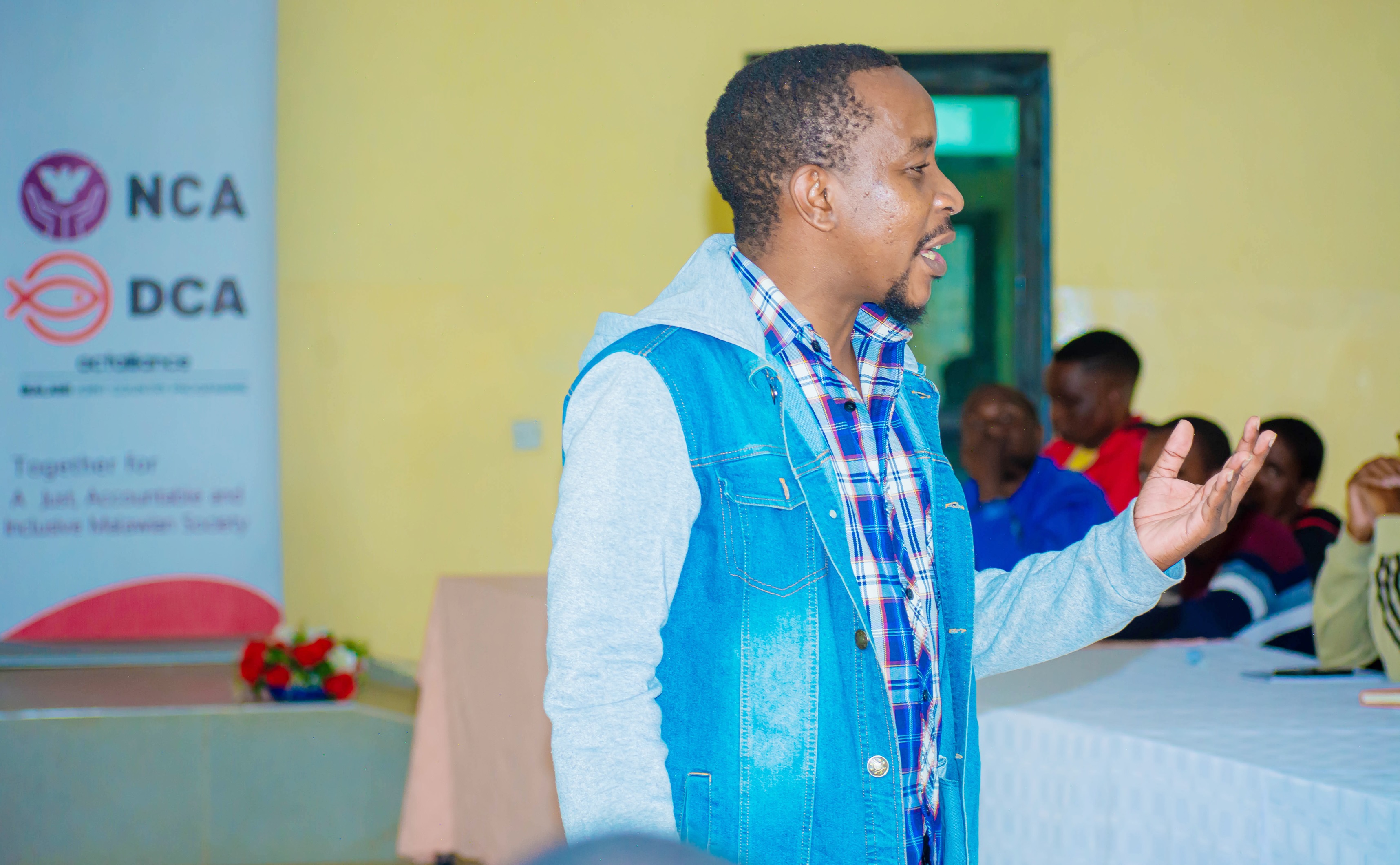
The Natural Resources Justice Network (NRJN), a grouping of Civil Society Organisations (CSOs) operating in Malawi’s mineral sector, has urged the Malawi government to take bold steps that will create a conducive environment for value addition as various players in the sector are advancing prospecting projects for critical minerals.
Speaking after a two-day Southern Africa Resource Watch (SARW) webinar, Coordinator for NRJN Kennedy Rashid said the country is yet to align its strategies to those of the continent and that there is a need to take transformative steps to reap from the minerals.
Rashid said SARW webinar was one of the platforms that laid out a clear vision for Africa to move beyond raw mineral extraction and use its resources for true structural transformation.
“Even though the government is believed to be working on harmonising legal and regulatory frameworks with other African nations frameworks, like directly supporting the African Union's Green Minerals Strategy, bold steps are yet to be made that can create the required environment for value addition.”
“While Malawi's ambition is clear, the key challenge lies in translating policy into tangible results.”
“As noted in the recent Mining Diagnostic Survey Report, one of the key challenges that Malawi has is to translate what theoretically is on paper into practice and that all I can say in short is that ‘ambition without capacity is not a strategy’.”
Rashid, however, commended Malawi's active presence at forums like the African Mining Indaba saying it signals government’s commitment to a unified African voice in global negotiations which strengthens Mineral Diplomacy.
He said the success of these various frameworks depends on building the technical and institutional capacity and implementation.
Rashid said: “The country's primary failures are not in attending summits, but in the domestic governance of its mineral wealth.”
“Critical shortcomings include government weak revenue capture, secrecy and lack of oversight and limited participation of citizens.”
“Despite the various gaps, mining has shown that is has great potential and created a lot of positive social and economic expectations.”
The webinar also dwelt on political economy of green minerals whereby the transition is not purely technical but a power struggle.
The global demand is creating new dependencies, and Africa must leverage this to renegotiate its position in global supply chains away from being a raw material periphery.
On Mineral Resource Governance, the webinar fought for an urgent need for transparent, accountable, and equitable legal frameworks to prevent the resource curse, ensuring that contracts are beneficial and revenues are reinvested into local development.
It also tackled the need for Africa to adopt a unified, proactive foreign policy to engage trading partners (EU, US, China) as equal negotiators, using collective bargaining to secure fair pricing, technology transfer, and local processing investments.
Malawi's critical minerals portfolio includes a diverse range of resources that are essential for modern technologies and the global energy transition.
These minerals are distributed across various regions of the country, with significant concentrations in the northern and southern territories.
The country's geological formations harbor an impressive array of critical minerals, including uranium, rare earth elements (REEs), niobium, graphite, rutile, and tantalum.
These minerals serve as fundamental components in renewable energy technologies, electric vehicles, aerospace applications, and digital devices.
As global demand for these technologies accelerates, the strategic value of Malawi's resources continues to appreciate.
Share this:
Leave a Comment
Comments
Mining & Trade Review News

Agribusiness News

Subscribe to Newsletter
Rehabilitation:
The establishment of a stable and self-sustaining ecosystem, but not necessarily the one that existed before mining began. In many cases, complete restoration may be impossible, but successful remediation, reclamation, and rehabilitation can result in the timely establishment of a functional ecosystem.
Archives
Remediation:
The cleanup of the contaminated area to safe levels by removing or isolating contaminants. At mine sites, remediation often consists of isolating contaminated material in pre-existing tailings storage facilities, capping tailings and waste rock stockpiles with clean topsoil, and collecting and treating any contaminated mine water if necessary.
Stackholders Logos